
EMR Integrations with Jail Management Systems: 5 Reasons Why Interoperability Matters
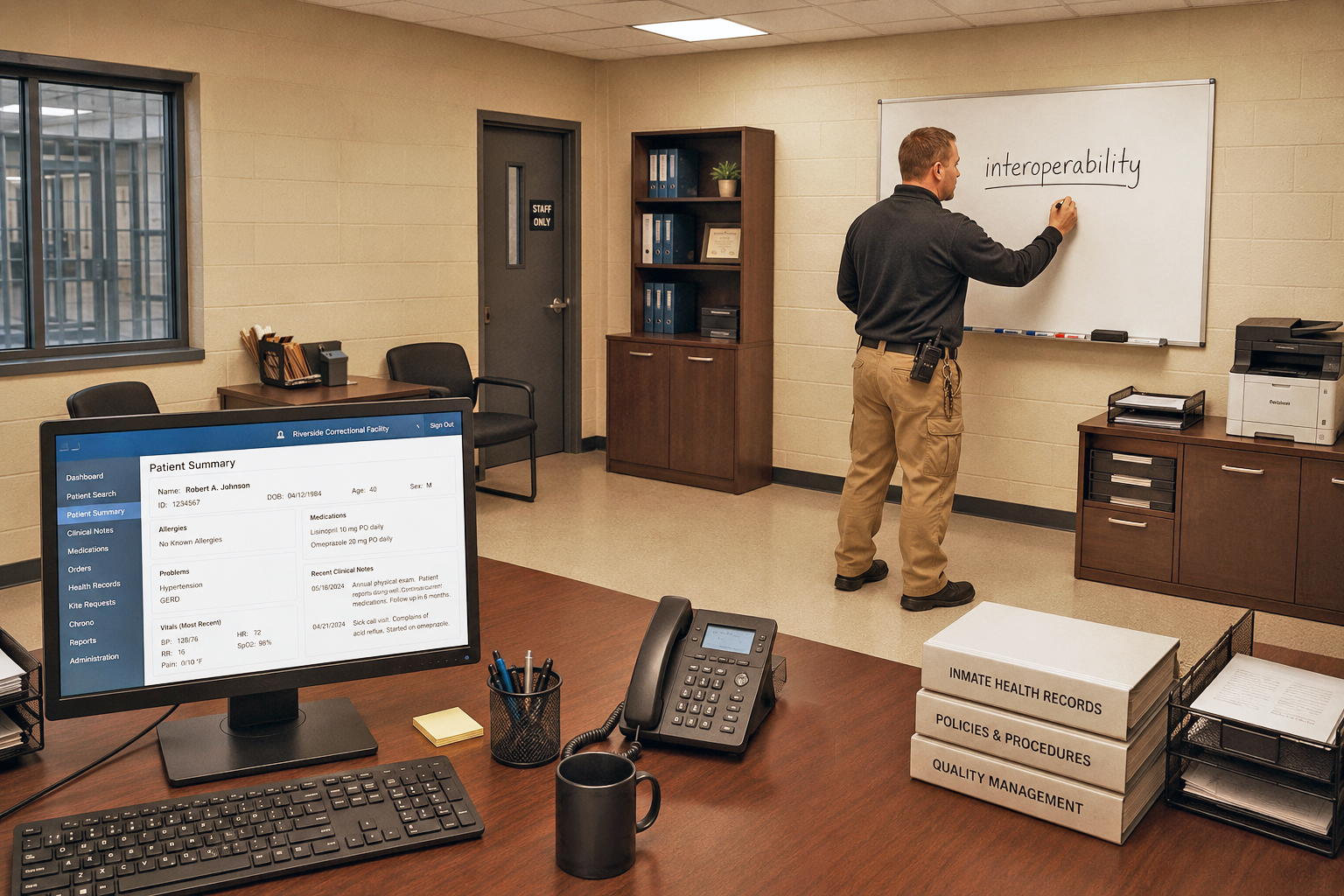
In correctional healthcare, communication gaps can quickly create operational challenges. Correctional staff rely on accurate, timely information to keep facilities running efficiently. When an Electronic Medical Record (EMR) system and a Jail Management System (JMS) operate separately, the staff may be forced to duplicate data entry, verify records manually, or work around delays in information availability.
That is why interoperability between an EMR and JMS systems are so important.
Interoperability refers to the ability of two systems to securely exchange and use information in real time. In correctional healthcare, this typically means connecting a facility’s Jail Management System with its Electronic Medical Record platform.
For correctional facilities, interoperability may include:
Automatic inmate demographic imports
Real-time housing and location updates
Intake synchronization
Secure exchange of medical information
Pharmacy and lab integrations
Improved reporting and analytics
Streamlined documentation workflows
Modern correctional healthcare EMR systems are increasingly moving toward connected platforms that allow data to flow securely and efficiently between systems. An integrated EMR and JMS environment helps facilities improve access to critical information and help to support coordinated care throughout the incarceration process.
5 Reasons Interoperability Matters in Correctional Healthcare
1. Improved Efficiency for Staff
Correctional healthcare teams should have access to fast, reliable inmate information without duplicating data entry across systems. Integrated EMR and JMS platforms help to streamline the documentation process and allow staff to focus more on patient care.
2. More Accurate Information
Disconnected or manual system processes can lead to inconsistencies in records, such as housing status, identification, or medical history. Interoperability keeps data synchronized across platforms, improving accuracy and reducing confusion.
3. Better Cross-Department Communication
Healthcare, custody, mental health, and administrative teams all rely on shared information. An integrated system improves visibility and ensures critical updates are available during intake, transfers, releases, medication management, and chronic care.
4. Enhanced Security and Compliance
Standards like HL7 support secure data exchange while helping maintain HIPAA compliance. Interoperable systems reduce manual handling of protected health information and strengthen overall data security.
5. Scalable for Future Growth
As facilities adopt new tools like telehealth, pharmacy systems, and labs, interoperability provides a flexible foundation that supports additional integrations and long-term operational growth.
Interoperability is evolving from a technology preference to an operational necessity within correctional healthcare. Facilities that connect their EMR and Jail Management Systems can improve communication, strengthen data accuracy, and better support healthcare operations within the facility.
As technology continues to play a key role in correctional healthcare, integrated systems will have an increasingly important role in helping facilities stay efficient, accurate, and better prepared for future demands.
To learn more about DetainEMR’s integration capabilities and other EMR features, visit our Features page or contact us with any questions about how DetainEMR can support your facility.