
Correctional Facilities Need a Purpose-Built EMR, Not a Modified Hospital System
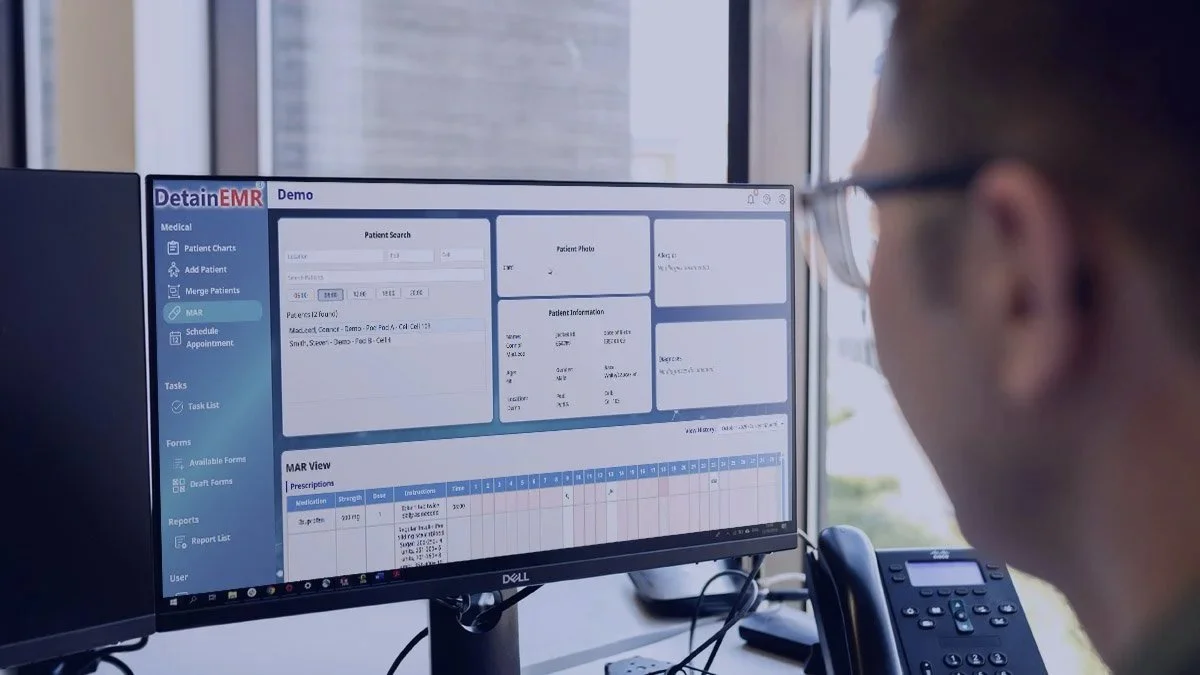
Correctional healthcare is not hospital healthcare inside a different building. It operates within security constraints, intake surges, rapid inmate turnover, court coordination, medication continuity challenges, and constant communication between medical and custody staff. Yet many facilities still rely on Electronic Medical Record (EMR) systems originally designed for hospitals or private practices that were later adapted into correctional EMR software. The result can mean possible ‘workarounds’, duplicate documentation, delayed medication passes, and reporting gaps that could create operational strain, compliance, and possible legal exposure.
When correctional facilities implement a modified hospital Electronic Health Record (EHR) system instead of purpose-built jail medical software, they may also discover that the system doesn’t align with real-world correctional workflows. What might work inside a community hospital simply does not translate to a jail or detention center environment, where intake screening, medication administration records (MAR), suicide watch documentation, and chronic care tracking should operate seamlessly within a secure setting.
Why Hospital EMRs Can Fail Correctional Environments
Hospital EMRs are built for long-term patient relationships, scheduled appointments, specialty referrals, and insurance-driven workflows. Correctional healthcare documentation, however, revolves around intake-to-release care, rapid assessments, episodic treatment, segregation health monitoring, emergency response, and high-volume medication administration under custody supervision.
A traditional electronic health record designed for hospitals is not built to integrate with jail management systems (JMS), support real-time collaboration between medical and custody staff, or generate the correctional health compliance reports for audits, accreditation, and litigation defense. When your correctional healthcare software does not align with operational realities, staff efficiency suffers. Documentation may take longer, reporting can become manual and error-prone, and audits may feel stressful. Audits become stressful. As a result, jail leadership may end up without clear data insights needed to proactively manage risk exposure and ensure positive patient outcomes.
What a Correctional EMR Should Deliver
A purpose-built correctional EMR is engineered specifically for detention centers, county jails, and correctional healthcare providers. It supports high-volume intake screening, customizable health assessments, chronic disease management, behavioral health documentation, medication administration workflows, and automated compliance-ready reporting.
The right jail EMR software integrates directly with your jail management system, tracks high-risk populations, streamlines medication passes, and helps reduce duplicate charting between departments. It provides real-time dashboards for correctional health administrators and produces defensible documentation that protects facilities should there be grievances, audits, or litigation.
In an environment where operational efficiency, liability reduction, accreditation readiness, and patient security are inseparable, using a modified hospital EMR is not just inconvenient—it’s costly. Correctional facilities need electronic medical records built for corrections, not retrofitted for it.
Steps Correctional Leaders Can Take to Choose the Right EMR
Audit your current correctional EMR or EHR system. Identify where staff might be creating ‘workarounds’ or duplicating documentation.
Evaluate compliance reporting capabilities. Can you quickly generate medication, chronic care, and audit-ready correctional health reports without manual exports?
Assess intake and booking workflows. Can your system support high-volume screening and rapid health assessments during booking?
Review integration with your jail management system. Is data shared seamlessly between medical and custody?
Engage frontline staff. Ask where your jail medical software slows them down during medication pass, emergency response, or documentation.
Compare your system to purpose-built correctional healthcare software. Determine whether it was designed specifically for detention environments or modified from a hospital platform.
If you're unsure whether your correctional EMR system is truly built for correctional healthcare, now is the time to take a closer look. If you’re in the market for a medical record system designed and developed by doctors and nurses specifically for the correctional healthcare community, now is the time to reach out for more information about DetainEMR.
Send us any questions or comments your facility might have, or visit our Features page to see how DetainEMR is purpose-built for correctional facilities, jail medical teams, and the operational realities of the corrections industry.