
How a Correctional EHR Can Protect Your Facility from Potential Legal Issues
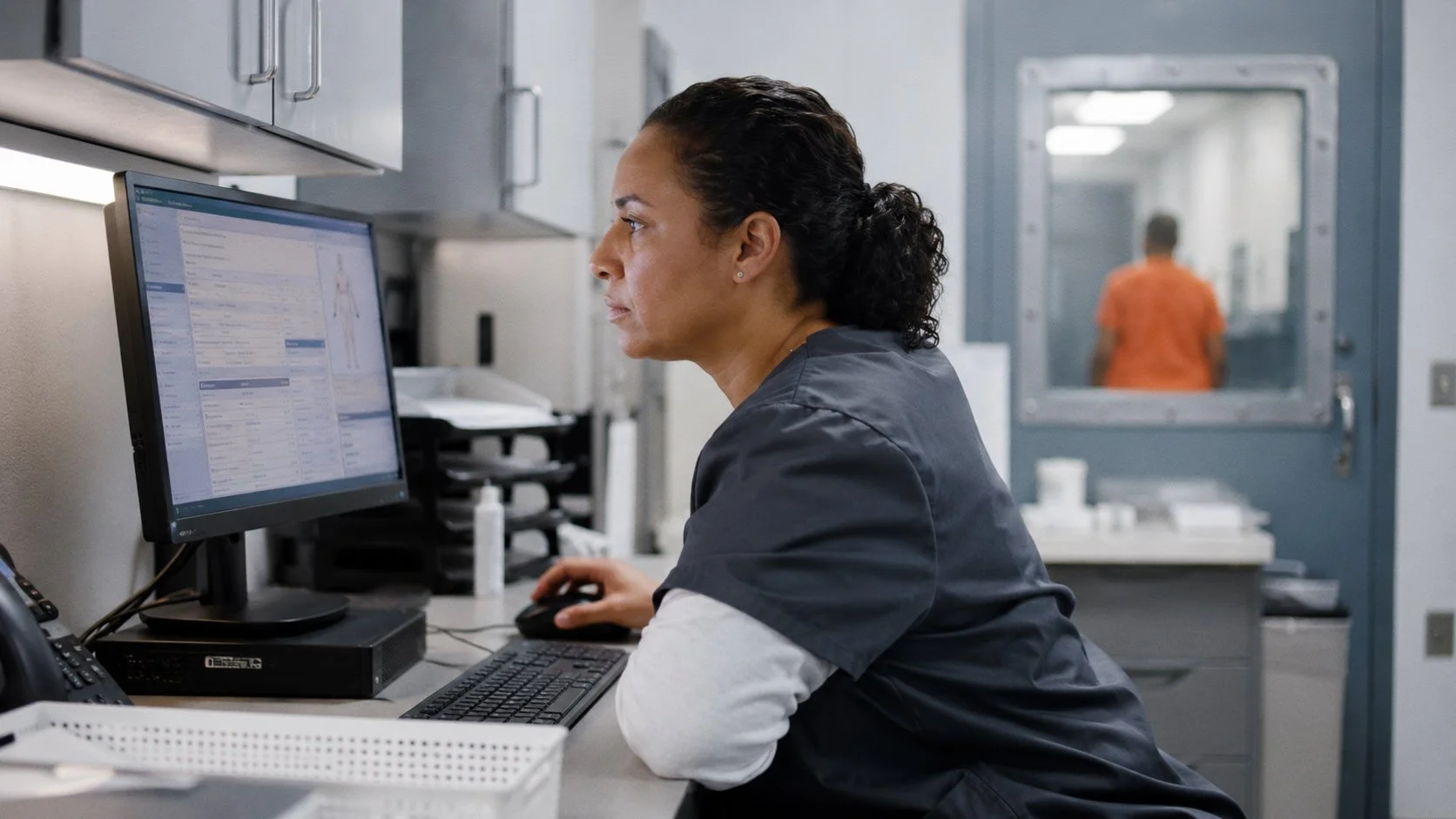
When questions arise about healthcare inside a jail, the patient record often becomes one of the most important sources of information. Jail administrators may need to determine what happened, when care was provided, who documented it, and whether follow-up occurred. A correctional Electronic Health Record (EHR) can strengthen legal defensibility and support compliance through a complete and secure record of patient care.
How a Correctional EHR Strengthens Legal Defensibility
EHR legal defensibility depends in part on documentation that clearly shows what occurred and when. Accurate correctional healthcare documentation can become critical when a facility reviews a grievance, incident, investigation, or legal claim. Unlike paper records, an electronic health record can automatically link documentation to the date and time it was created along with the individual user who entered it.
This time-stamped record can help jail administrators determine when assessments occurred, medications were documented, providers were contacted, and follow-up actions were entered. Instead of relying on employee memory or disconnected paperwork, the facility has a centralized electronic record that can help reconstruct the sequence of care.
An EHR audit trail can provide another layer of transparency. Depending on the correctional EHR system, administrators may be able to review who accessed a patient chart, when documentation was entered, and what changes occurred within the health record.
Electronic Health Records Help Protect Record Integrity
Correctional medical records may need to remain available long after a patient has transferred or been released. Paper charts can be misplaced, damaged, separated, or difficult to retrieve, particularly when healthcare documentation is stored in several locations.
A correctional healthcare EHR can centralize patient information and support secure electronic health record storage. System backups, user authentication, and access controls can help preserve important documentation while reducing dependence on individual paper files.
Electronic health record security can also provide greater oversight of sensitive health information. Secure credentials, role-based permissions, and audit capabilities help facilities better understand who has access to patient records and how that information is being used.
How a Jail EHR Supports Compliance and Continuity of Care
Patient privacy is an important part of correctional healthcare compliance. Not everyone working inside a jail needs access to the same health information, and a jail EHR can use role-based access controls to limit what different users can view or update.
These permissions help correctional facilities provide employees with information appropriate to their roles without making the complete health record broadly available. Access can also be modified as employee duties change, providing administrators with greater control over sensitive healthcare information.
Correctional healthcare software can also help keep pending care from getting lost in paperwork or depending on employee memory. Alerts, task lists, scheduling tools, and follow-up functions can keep appointments, provider orders, referrals, and other outstanding actions visible to the employees managing care.
A Complete Electronic Record Creates a Clearer Story of Care
Strong correctional healthcare documentation should show more than a collection of individual encounters. The health record should allow someone reviewing the chart to understand how the patient’s care developed over time.
A correctional EHR can organize assessments, medication administration, provider communication, patient refusals, outside appointments, referrals, follow-up care, and changes in condition within one chronological patient record. That organization helps healthcare employees and administrators see how one event connects to the next.
A complete chronological record can become especially valuable during compliance reviews, grievances, audits, investigations, or litigation. Organized EHR documentation makes it easier to identify what information was available and how the patient’s care progressed over time.
Five Steps Correctional Leaders Can Take
Review how your facility documents time-sensitive patient care. Identify where employees still rely on paper records or separate systems to document important correctional healthcare events.
Confirm that your EHR maintains an accessible audit trail. Understand what user activity is recorded and whether administrators can review that history when documentation questions arise.
Evaluate role-based access to health records. Make sure employee permissions reflect current job functions and can be updated promptly when responsibilities change.
Examine how your facility tracks pending follow-up care. Determine whether appointments, provider orders, referrals, and other unfinished actions remain visible until they are addressed.
Review a patient record as if you were seeing it for the first time. Ask whether the electronic health record provides a clear chronological story without requiring someone to search multiple systems or paper files.
A correctional EHR does more than replace paper health records. The right system can support more consistent documentation, stronger record integrity, controlled access to patient information, and a clearer history of the care provided.
DetainEMR is more than just a standard EMR, it’s an award-winning electronic health record software designed specifically for correctional environments. If your facility is reviewing its documentation and patient-care processes, contact the DetainEMR team to learn how a correctional EHR can support your operation. You can also visit our Features page to explore the EHR capabilities available within DetainEMR.